
Introduction
Mobility is easy to take for granted until walking becomes uncomfortable. A sore foot, aching ankle, or feeling of heaviness in the legs can change how a person moves throughout the day. What may begin as a small inconvenience can eventually affect exercise, work, travel, and even simple activities around the home.
Foot health and vein health are often discussed separately, but the two are closely connected through movement. The feet and lower-leg muscles play an important role in helping blood return toward the heart. When foot pain or another mobility problem causes someone to walk less, the muscles responsible for supporting venous circulation may not work as effectively.
This does not mean every foot problem is caused by poor circulation or that every vein condition originates in the feet. Instead, the relationship is more practical: healthy feet make movement easier, and regular movement supports healthy circulation. For people experiencing persistent visible veins or leg discomfort, exploring treatment for visible veins and leg discomfort in Stone Oak can also help them understand when professional evaluation may be appropriate.Understanding this connection can encourage people to pay attention to both areas as part of a broader approach to mobility and wellness.
Why Walking Matters for Circulation
The circulatory system is constantly moving blood throughout the body. While the heart provides the main pumping force, veins in the legs have the challenging job of returning blood upward against gravity.
Movement helps. When the muscles of the feet and lower legs contract during walking, they assist the return of blood through the veins. One reason the lower-leg muscles are sometimes described as a “muscle pump” is that their repeated contractions help push venous blood upward.
This makes ordinary walking more than a way to get from one place to another. It is also a natural form of physical activity that supports circulation.
When foot discomfort limits walking, however, a person may become less active without realizing it. A few skipped walks can turn into weeks of reduced movement. Over time, that change can affect general fitness, muscle strength, and cardiovascular health.
How Foot Problems Can Change the Way You Move
Foot pain rarely stays isolated to the foot.
When someone has a painful heel, bunion, arthritis, plantar discomfort, or another foot problem, they may instinctively change their gait to avoid putting pressure on the painful area. They might take shorter steps, place more weight on the opposite side, or avoid walking altogether.
These adjustments are understandable, but prolonged changes in movement can place additional stress on the ankles, knees, hips, and lower back. More importantly for overall wellness, they can reduce the amount of daily physical activity a person gets.
This creates a cycle that can be difficult to break. Discomfort leads to less movement, less movement can contribute to reduced strength and conditioning, and reduced conditioning can make ordinary physical activity feel harder.
Maintaining comfortable, functional feet is therefore an important part of maintaining an active lifestyle.
The Role of the Foot and Calf Muscle Pump
The relationship between foot health and venous circulation becomes particularly interesting when looking at the mechanics of walking.
Every step involves coordinated movement through the foot, ankle, and calf. As the ankle moves and the calf muscles contract, pressure within the veins changes, helping blood move upward. Valves inside healthy veins help keep blood flowing in the appropriate direction.
When the legs are moving regularly, this system has frequent opportunities to assist venous return. When a person remains still for long periods, the muscle pump is much less active.
This is one reason prolonged sitting can contribute to feelings of heavy or tired legs. It is also why simple movement breaks can be useful during long workdays, road trips, or flights.
The goal does not have to be intense exercise. Regular movement throughout the day can be valuable.
Varicose Veins and Leg Discomfort
Visible veins are another reason to consider the relationship between circulation and mobility.
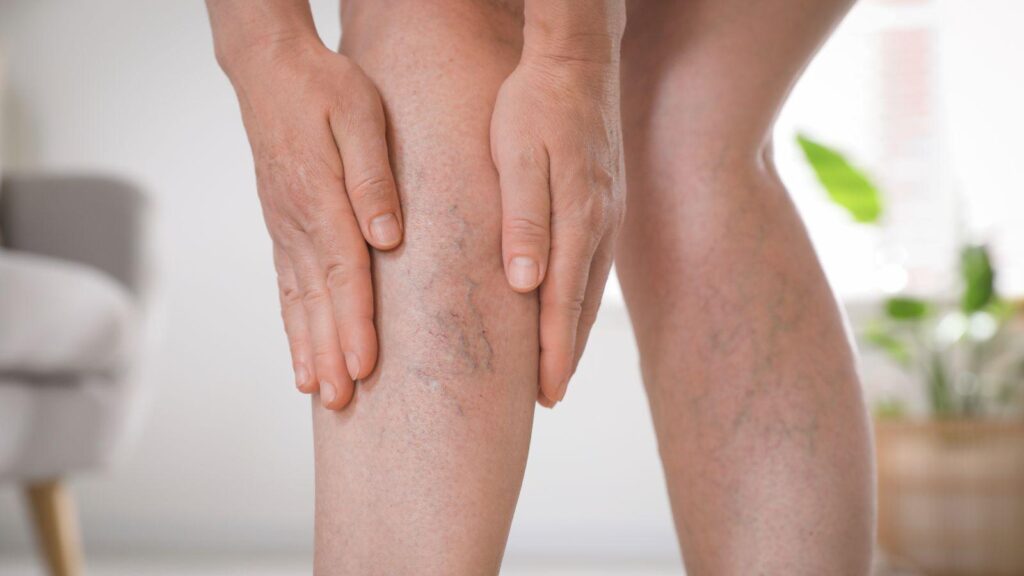
Varicose veins are enlarged, twisted veins that most commonly appear in the legs. They can be primarily a cosmetic concern for some people, while others experience symptoms such as aching, heaviness, swelling, itching, or discomfort.
The presence of visible veins does not automatically mean that a person has a serious circulation problem. However, persistent symptoms deserve attention, particularly when they interfere with normal activities.
People who experience ongoing leg discomfort may gradually reduce walking because it becomes unpleasant. That response can affect mobility even when the original problem is related to the veins rather than the feet.
A proper assessment can help distinguish between different causes of leg symptoms and determine whether monitoring, lifestyle measures, or medical treatment may be appropriate.
Footwear Can Influence Mobility
Shoes are another important part of the foot-and-mobility equation.
Poorly fitting footwear can create pressure points, contribute to blisters, worsen existing foot problems, and make walking uncomfortable. Shoes that provide appropriate support and sufficient room for the toes can make everyday movement easier.
The right footwear will vary from person to person. Someone who spends most of the day standing may have different needs from someone who works at a desk. A runner, traveler, construction worker, or older adult may also require different features.
Comfort should not be dismissed as a luxury. If footwear consistently causes pain, a person may naturally become less willing to walk.
In that sense, choosing comfortable shoes can be a simple way to remove one barrier to daily movement.
Movement Does Not Have to Mean a Workout
When people hear that physical activity supports circulation, they sometimes assume they need a structured exercise program.
Formal exercise is certainly valuable, but movement can take many forms.
Walking around the neighborhood, doing household chores, gardening, shopping, climbing stairs, stretching, or taking short breaks during a workday all involve some degree of movement. For people who spend long periods sitting, standing up periodically and moving the ankles and legs can be a practical habit.
The key is consistency.
Someone who walks for ten minutes several times throughout the day may find that approach easier to maintain than attempting a demanding workout once a week. Individuals with existing foot, leg, or cardiovascular conditions should choose activities appropriate for their circumstances and seek professional advice when necessary.
Recognizing When Foot Pain Is Not Just a Foot Problem
Foot discomfort is common, but persistent or unexplained symptoms should not automatically be attributed to footwear or aging.
Swelling, persistent leg heaviness, changes in skin color or texture, recurring pain, or significant differences between the two legs may warrant medical evaluation. Some symptoms can be associated with venous conditions, while others may have completely different causes.
Likewise, sudden or severe swelling or pain should not be ignored, particularly when accompanied by other concerning symptoms. Medical professionals can determine whether further evaluation is necessary.
The broader lesson is simple: symptoms that affect mobility deserve attention because mobility itself is an important component of health.
Protecting Foot Health as You Age
Foot health can become increasingly important with age. Changes in muscle strength, joint flexibility, balance, skin condition, and footwear needs can all influence how comfortably someone moves.
Maintaining strength and flexibility can help preserve mobility. Regular walking, appropriate stretching, balanced nutrition, and suitable footwear can all contribute to maintaining functional movement.
Routine healthcare also matters. People with conditions such as diabetes may need particularly careful foot monitoring because nerve and circulation problems can increase the risk of foot complications.
Taking care of the feet early can make it easier to remain active later.
A More Complete Approach to Mobility
It is tempting to think about mobility in terms of individual body parts. The foot hurts, so the problem must be the foot. The leg feels heavy, so the problem must be the leg.
In reality, movement is interconnected.
The foot interacts with the ankle, calf, knee, hip, and lower back. Circulation also interacts with physical activity, muscle function, body weight, and general cardiovascular health. A problem in one area can influence behavior elsewhere.
That is why a complete mobility strategy should consider more than exercise alone. Comfortable footwear, regular movement, attention to persistent symptoms, preventive healthcare, and appropriate professional evaluation all have a role.
Building Better Everyday Habits
Improving mobility does not require completely redesigning a person’s lifestyle.
A person can start by paying attention to how often they move during the day. Long periods of sitting can be interrupted with brief walks. Walking routes can be made slightly longer when comfortable. Shoes can be evaluated for fit and support. Foot discomfort can be addressed rather than tolerated indefinitely.
People can also become more aware of changes in their legs. If swelling, aching, heaviness, or visible veins become persistent, discussing them with a healthcare professional may provide useful clarity.
These habits work best when they become ordinary parts of life rather than temporary wellness projects.
Conclusion
Foot health and vein health may seem like separate subjects, but both influence one of the most valuable aspects of everyday wellness: the ability to move comfortably.
Healthy feet make walking easier. Walking activates the muscles of the lower legs, which can support venous return. Comfortable movement also makes it easier to stay physically active, maintain strength, and participate in daily life.
At the same time, persistent leg symptoms should not simply be accepted as an unavoidable part of getting older. Varicose veins, swelling, heaviness, and recurring discomfort can have different causes and may deserve professional evaluation.
Taking care of the feet, staying active within personal limits, choosing comfortable footwear, and paying attention to changes in the legs can create a stronger foundation for long-term mobility. Ultimately, looking after circulation is not just about blood flow. It is about preserving the freedom to walk, exercise, travel, work, and enjoy everyday life with greater comfort.